
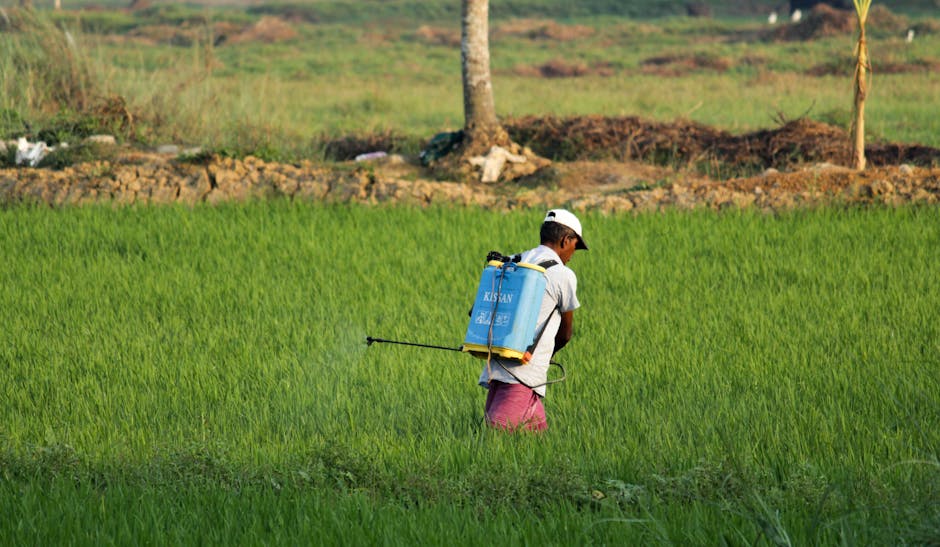
Three days can be enough time to prevent an unsafe pesticide assumption, if a farmer’s question reaches a named extension officer before spraying begins. The useful response may be a reviewed answer, a request to check the label, or an escalation. It must never be a confident guess.
In 1854, John Snow investigated a deadly cholera outbreak around Broad Street in Soho, London. He mapped deaths and linked many of them to a public water pump. His conclusion challenged the prevailing belief that cholera spread through bad air, and the evidence was still contested. The local authorities removed the pump handle. Snow documented the investigation in his 1855 book, On the Mode of Communication of Cholera.
The point was not that one observation solved every question about cholera. It gave people a reason to interrupt a harmful routine while the evidence was examined. A cocoa farmer asking before a spray day creates the same valuable interval: enough time to check what is known, identify what is missing, and involve someone accountable.
A voice note can arrive before the risky moment
Imagine a cocoa farmer in Ashanti recording a short Twi voice note on Monday: the field is due to reopen later in the week, workers will be nearby, and the pesticide label is damaged. The farmer wants to know whether a familiar product can be mixed and sprayed anyway.
That question carries more than one need. The farmer may need to identify the product, confirm the intended use, understand when people can safely return to the field, and know whether harvesting must wait. If any of those facts are missing, the safest next step is not a substitute dosage from memory.
AgriVoice is being prepared for this kind of exchange. Its design limits the system to selecting reviewed guidance blocks. It does not write agronomy advice on its own. For pesticide questions, content with missing or uncertain details must go to a human escalation path.
That boundary matters because fluent language can hide a dangerous error. Neuralis has already found that machine translation can swap a domain noun, turning the Twi word for cocoa, “kokoo,” into “chicken.” A polished response built on that mistake would be worse than silence. Agricultural Voice AI: Why Kokoo Becoming Chicken Must Trigger Human Review explains why the system has to stop when the meaning is uncertain.
The extension officer needs time and ownership
A useful escalation is more than a message placed in a queue. Before any farmer pilot, a cocoa-sector partner must own recruitment and name the extension officer who receives escalations. That person needs a clear question, the relevant context, and a route back to the farmer.
For the hypothetical Monday voice note, the system could first acknowledge the question in spoken Asante Twi. It could ask the farmer to avoid spraying until the product and safety instructions are checked. Then it could send the escalation to the named officer with the original question and the reason the automated path stopped.
By Tuesday or Wednesday, the officer may be able to confirm that the product is unsuitable for the situation, request a clearer photo of the label, provide approved guidance, or arrange a follow-up. Each outcome is better than allowing an unverified instruction to reach the farmer in an authoritative voice.
This is why timing changes the value of a voice channel. A question asked mid-mix may require an immediate stop and human help. A question asked days earlier gives the farmer and extension officer room to make a safer decision before workers, equipment, and chemicals are already in motion. What Should Voice AI Do When a Farmer’s Chemical Question Arrives Mid-Mix? explores the tighter version of that same problem.
Safety depends on the details that are still missing
AgriVoice is not ready to tell farmers how to use every chemical. Three pesticide-related content blocks remain held because dosage, re-entry, and pre-harvest intervals have not yet been verified by a Ghanaian agronomist. Keeping those blocks unavailable is a safety decision.
A system should be able to say, in the farmer’s language, that it cannot confirm an answer. It should make the next action clear: do not spray from memory, keep people out of the decision until the product is checked, and wait for the extension contact where necessary.
The proposed two-week pilot will test whether this process works with 20 to 50 cocoa farmers. Its scorecard treats a correctly handled escalation as a successful answer. It also sets a hard safety threshold: zero unsafe pesticide answers. That is the standard worth holding, because an unsafe answer cannot be balanced by a fast response time or a high count of completed conversations.
Build the pause into the workflow
John Snow’s work in Soho is remembered for the pump handle, but the mechanism was a disciplined pause: evidence was gathered, an assumption was challenged, and action changed before certainty satisfied everyone. A farmer’s early voice note can create that same pause.
The practical work is straightforward, even when it is not easy. Review guidance with farming-aware Twi translators. Hold chemical content until an agronomist verifies it. Name the person who owns escalations. Test whether the farmer understands the spoken response. Measure whether the officer responds within a working day.
When the field reopens, the best outcome may be a safe, reviewed answer. Sometimes it will be a decision to wait. Both protect the farmer from the most dangerous response of all: advice that sounds certain when nobody has checked it.
Comments
No comments yet.