
A bullish cocoa headline before breakfast should not change a farmer’s reviewed farm action that day. Futures prices can affect expectations, but they do not diagnose a cocoa tree, verify a pesticide dose, or replace guidance from an accountable agriculture professional.
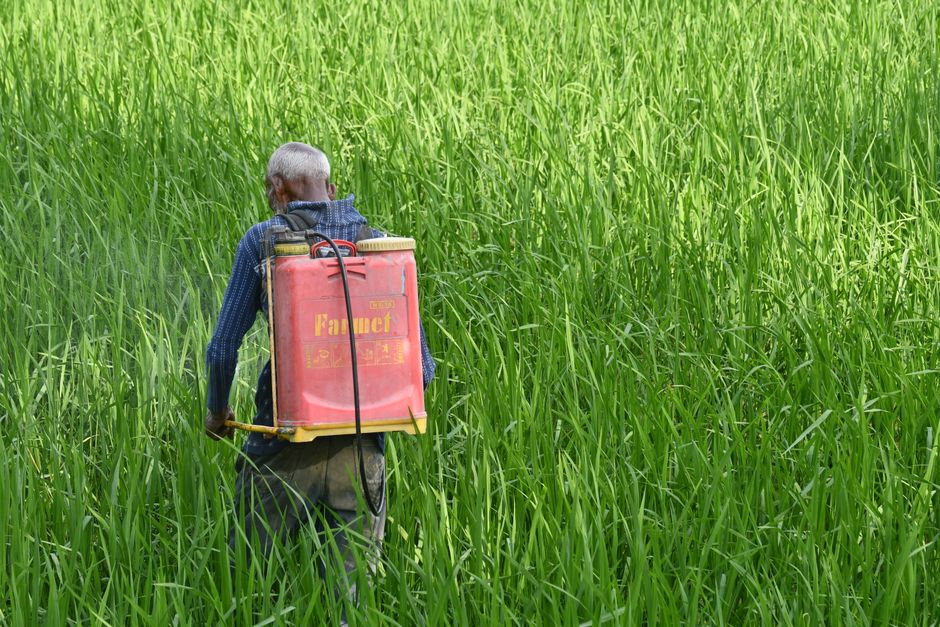
Consider Kofi, an illustrative Asante-Twi-speaking cocoa farmer near Kumasi. At 6 a.m., he hears that September New York cocoa closed 5.41% higher on Monday. His sprayer is beside the doorway, and the leaves he cut yesterday are folded inside an old fertilizer sack.
The headline makes waiting feel expensive. If cocoa is rising, perhaps every pod he protects will be worth more. Kofi starts wondering whether he should spray immediately, using the chemical left from the previous season.
But the container’s instructions are difficult to read. He cannot confirm the dose, the re-entry interval, or how long he must wait before harvesting. If he guesses, the bad ending is concrete: workers could enter the field too soon, chemical residue could threaten the crop, or the wrong treatment could leave the disease untouched.
The price has moved. The safe action has not.
A market signal cannot diagnose a farm problem
The reported price jump says something about a traded market at a particular moment. It does not tell Kofi what caused the marks on his cocoa leaves.
That distinction matters because a bullish headline can create urgency without supplying evidence. The mind quickly connects higher prices with a need to protect more crop, harvest faster, or spend more on inputs. Yet none of those decisions becomes agronomically sound because a futures contract rose before breakfast.
Kofi still needs answers to separate questions:
What is affecting the tree? Is the available product appropriate for that problem? What dose has a Ghanaian agronomist verified? What protective equipment is required? When may someone safely re-enter the field? What is the pre-harvest interval?
A market headline answers none of them.
This is where a voice service can either reduce risk or amplify it. A fluent answer may sound convincing even when the underlying instruction lacks expert review. Neuralis designed AgriVoice so the language model selects from reviewed content blocks rather than composing fresh agronomy. When approved content does not cover the question, the workflow should escalate to a person.
That boundary is especially important for chemical guidance. Neuralis currently withholds three chemical content blocks while dosage, re-entry, and pre-harvest details await agronomist review. The safer response is refusal and escalation, as explained in What Should Voice AI Do When Pesticide Guidance Has Not Been Verified?.
Urgency should change the question, not lower the standard
Kofi has a real reason to care about the market. A higher quoted price may shape his expectations about income, negotiations, and the value of protecting his harvest. Ignoring the news would be unrealistic.
The useful move is to turn excitement into better questions.
Instead of asking, “What should I spray now?”, he can ask, “Does this market movement affect the price available to me?” Instead of assuming every pod now justifies extra spending, he can separate the possible value of the crop from the verified cost and purpose of an input. Instead of treating speed as protection, he can confirm the diagnosis first.
These distinctions protect him from a familiar mental shortcut. When the potential reward feels larger, risky action can start to look more reasonable. The underlying safety facts remain unchanged.
A pesticide with an unverified dose does not become safer when cocoa futures rise. A leaf symptom does not become easier to identify. A missing re-entry interval still leaves workers exposed to an unknown risk.
AgriVoice’s intended role is narrow and practical: hear a farmer’s Asante Twi question, select relevant reviewed guidance, speak the answer, and send uncertain or unsupported cases to a named extension officer. The pilot must test whether that chain works with real farmer speech. It must also show zero unsafe pesticide answers before expansion deserves consideration.
The correct response may be to leave the sprayer sealed
With the sprayer still by the doorway, Kofi asks his question in Twi. In this illustrative scene, the available reviewed guidance cannot establish the diagnosis or verify instructions for the chemical he has.
The system does not improvise a dose. It flags the gap for human review.
That turn arrives before pressure becomes action. Kofi had already placed the container beside the mixing bucket. Without a clear stop, he might have measured from memory and entered the field while the morning was still cool.
Now he puts the container back under cover and keeps the affected leaves for the extension officer to examine. The delay could still cost him if the disease progresses. Spraying the wrong product could cost him too, while adding risks he cannot see from the market report.
The decision is uncomfortable because escalation does not promise an immediate answer. It provides something more valuable in that moment: a clear boundary between reviewed guidance and a confident guess. Why fluent cocoa advice must still know when to stop is central to whether local-language voice tools deserve farmers’ trust.
Keep market news and field evidence in separate hands
By mid-morning, the bullish headline may still matter to Kofi. He can note it, ask what local price it may influence, and use verified information when considering sales or spending.
His farm decision follows a different evidence chain. The leaf symptoms need assessment. The treatment needs reviewed instructions. Chemical guidance needs a confirmed dose, re-entry interval, and pre-harvest interval. Any missing link triggers escalation.
That separation prevents a financial signal from masquerading as agronomic advice.
Kofi leaves for the field with his pruning tool, the folded sack of leaves, and no chemical mixture on his back. The market opened a question. It did not earn the right to answer it.
Comments
No comments yet.