
A higher cocoa price can make spraying feel easier to justify, but it also raises the cost of acting on incomplete chemical advice. The safer response pairs any price alert with reviewed Asante Twi guidance on dosage, re-entry time and the pre-harvest interval, or directs the farmer to a named extension officer when those details remain unverified.
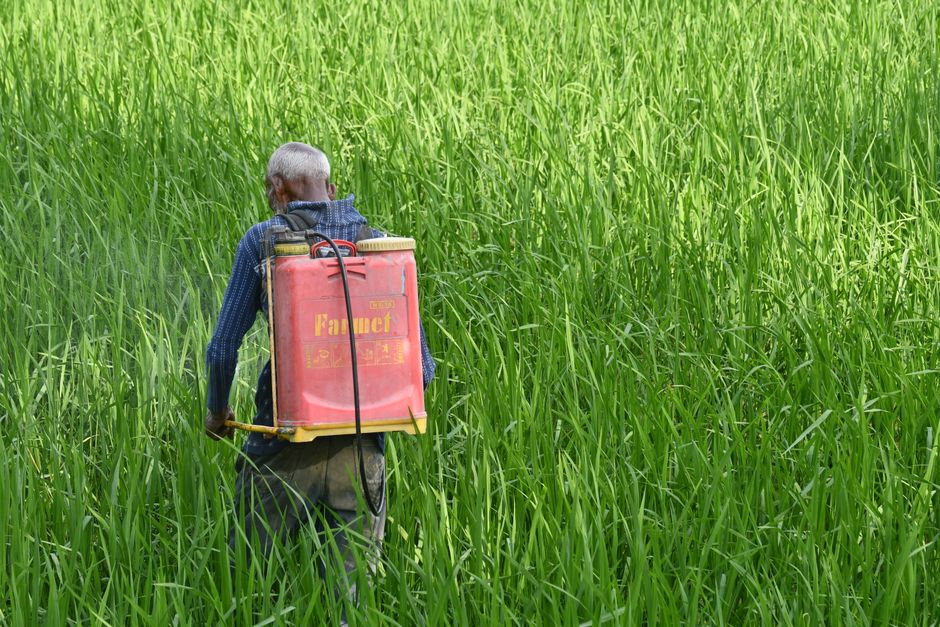
Consider an illustrative farmer named Kwame. Before dawn near Kumasi, he is standing beside a knapsack sprayer with a price alert playing from his phone. His daughter is still asleep inside. The message says cocoa prices have risen, and Kwame begins calculating what a healthier harvest could mean for school costs and the repairs he postponed after the last rains.
Yesterday he noticed damaged pods. This morning, the higher price makes waiting feel expensive.
The chemical container beside him names a product he recognizes, but he cannot confirm the dose for his sprayer. He also does not know how long his family should stay out of the treated area or how much time must pass before harvesting. If he sprays too weakly, he may waste scarce input money and fail to control the problem. If he sprays too heavily or returns too soon, the consequences could reach beyond the crop.
He needs an answer before he opens the container.
A price rise changes the pressure around the decision
Recent market news offers a useful example of that pressure: September ICE New York cocoa closed up 310 points, or 5.41%, on Monday, while September ICE London cocoa rose 178. Those market movements do not tell an individual farmer what a buyer will pay, and they do not diagnose a pod or determine a pesticide dose. They can still change how urgent the next farm decision feels.
A farmer hearing that prices have risen may see more value at risk in every affected tree. Delaying treatment can feel like watching income disappear. Buying another chemical can feel reasonable. Spraying immediately can feel responsible.
That is precisely when safety information must become more specific.
“Apply the recommended amount” leaves the farmer with the same decision. “Avoid the farm after spraying” gives no usable return time. A spoken answer needs the verified dose for the relevant product and application context, the re-entry interval, the pre-harvest interval and the precautions that must always accompany pesticide guidance.
Without those details, the system should withhold the instruction. Neuralis has already taken that position with three AgriVoice chemical guidance blocks whose dosage and interval information still requires clearance from a Ghanaian agronomist. The three withheld blocks show what that refusal could prevent.
The safest voice answer may tell Kwame to pause
Kwame lifts the container and tries to make out the small print in the weak light. The price alert is still fresh in his mind. If he waits and the damage spreads, he could lose part of a crop that suddenly feels more valuable. If he guesses, his daughter might walk into the treated plot later that day.
The bad ending remains possible either way.
In the intended AgriVoice workflow, the language model does not compose agronomy advice from scratch. It selects from content that has already been reviewed. Mandatory pesticide safety text stays attached to the answer. When the correct block is missing, uncertain or still awaiting expert approval, the question goes to a person instead of producing a confident guess.
For Kwame, that means the useful response would be plain: do not mix or spray from an unverified dose. Keep people away from the treatment area. Contact the named extension officer for the product-specific dosage, re-entry interval and pre-harvest interval.
That answer may frustrate him at first. It also prevents the voice from turning urgency into false certainty. When a farmer needs an unverified pesticide dose now, escalation is part of the answer.
Asante Twi must carry the safety detail accurately
The answer also has to survive the journey from reviewed text to spoken Asante Twi.
Agricultural terms create dangerous translation traps. In Neuralis testing, machine translation changed “kokoo,” meaning cocoa, into “chicken.” The sentence could sound fluent while pointing to the wrong subject. That is why AgriVoice’s approved content must be translated and reviewed by someone who speaks Asante Twi and understands farming vocabulary.
The wording should sound natural when heard in a field, not formal because it was written for a document. Where farmers commonly use an English term such as “fungicide” or “COCOBOD,” forcing an unfamiliar alternative can reduce understanding. Dosage, timing and warnings must remain exact even when the sentence becomes conversational.
The voice itself has limits too. Neuralis’s existing Asante Twi voice is suitable for pilot testing, but its measured intelligibility missed the full acceptance gate and its scripture-based recordings can sound formal. The planned farmer pilot therefore measures whether people understand the response, rather than assuming that generated speech was understood because audio played successfully.
The next safe step happens before the sprayer opens
Back near Kumasi, Kwame leaves the container sealed. He moves the sprayer away from the doorway and records a short voice message for the extension officer, naming the product and describing what he saw on the pods. The market alert still matters. It has changed what the crop could be worth and how costly delay may feel.
It has not supplied a diagnosis, a dose or a safe harvest date.
Before AgriVoice can support that moment with real farmers, its translated content needs farming-aware review, the held chemical blocks need agronomist approval, and every escalation needs a named owner who responds. The practical test is simple: when the sun comes up and Kwame is ready to spray, the answer must contain verified instructions he can understand, or give him a clear human route while the container remains closed.
Comments
No comments yet.