
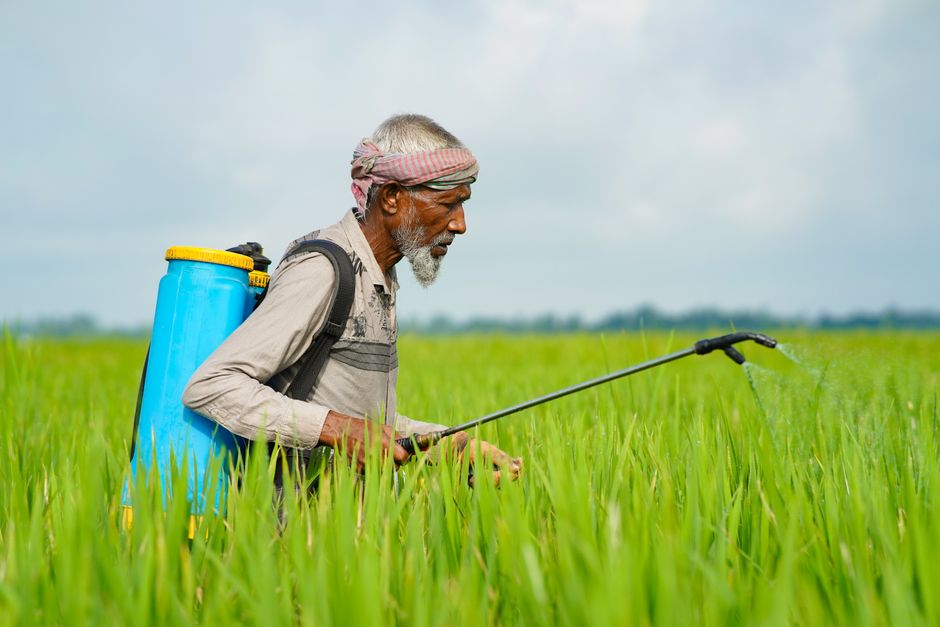
A safe voice system should stop when pesticide guidance is uncertain and hand the question to a qualified person while there is still time to change the farmer’s decision. The useful answer may be a clear request to wait, followed by an escalation, rather than a generated dose that sounds confident.
At 6:12 a.m., in a hypothetical cocoa farm near Kumasi, Kwame rests his phone on a sack while his nephew carries water toward the sprayer. The product label is worn. Kwame remembers the chemical name, but he cannot confirm the dose, the re-entry interval, or how long the family should wait before harvesting. He records a short voice note in Asante Twi.
The first container is already beside the mixing bucket.
The dangerous gap between a question and an answer
Kwame needs a response before anyone fills the sprayer. If the answer arrives after mixing begins, stopping becomes harder. Water has been carried, labour has started, and everyone expects the morning’s work to continue.
A fluent answer can make this moment worse when the underlying guidance has not been reviewed. A language model might produce a plausible quantity from incomplete context. Machine translation might quietly change an important crop or chemical term. The farmer hears a calm voice and has little reason to know that the sentence rests on a guess.
The bad ending is specific: Kwame mixes the wrong amount, someone returns to the sprayed area too soon, or cocoa is harvested before the required interval has passed.
No digital assistant should improvise its way through that uncertainty.
AgriVoice is being designed around a narrower role. A farmer speaks in Twi. The system identifies the question and selects from content reviewed in advance. For pesticide questions, that content must include verified dosage, re-entry guidance, and pre-harvest intervals. When those details are missing or the question does not match safely, the workflow escalates to a named extension officer.
The handoff carries the safety value.
Why a refusal must still help the farmer
A dead end would leave Kwame alone with the same decision. “I cannot answer” protects the system, but it does little for the person standing beside the sprayer.
A useful uncertainty response needs to do three things in plain, spoken Twi: tell Kwame not to mix or spray yet, explain which information cannot be confirmed, and send the question to the person responsible for resolving it. The words should be brief enough to understand outdoors, without a screen or a long technical explanation.
In this imagined scene, the system matches the chemical question to one of the withheld guidance areas. It does not create a dose. Kwame hears that the dosage and safety intervals have not been verified and that his question needs human review.
He calls to his nephew to leave the water where it is.
That pause buys something valuable: the chance to verify the product, crop problem, label, and timing before anyone acts. The related principle is explored further in what AgriVoice should do when a farmer needs an unverified pesticide dose now and in the account of the three chemical guidance blocks AgriVoice withheld.
The human handoff needs an owner
“Escalated” can become an empty status unless a real person owns the queue. For the planned AgriVoice pilot, a cocoa-sector partner must name the extension officer who receives these questions. The pilot scorecard also requires the response time to be measured, with a target median below one working day.
That operating detail matters as much as the speech model. The farmer needs to know the question was passed on. The extension officer needs the original question and enough context to respond. The team needs to see whether cases remain unresolved.
For Kwame, tomorrow may be too late. The fieldwork is planned for this morning, so the handoff should make urgency visible without inventing an answer. If a qualified response cannot arrive before spraying must begin, the safe outcome remains a delay.
This is why the three chemical guidance blocks remain held until a Ghanaian agronomist verifies dosage, re-entry, and pre-harvest information. Refusing those questions is currently the correct behaviour. Farmer exposure should begin only after the content, Twi translation, WhatsApp path, field speech testing, and escalation process have all passed their gates.
What changes at 6:20 a.m.
Eight minutes after recording his question, Kwame still does not have a pesticide dose. That absence can feel unsatisfying when a sprayer is waiting.
But the dangerous action has stopped. The chemical remains sealed. His nephew has set down the water. The unresolved question now sits with someone accountable for checking it, rather than inside a generated sentence that nobody reviewed.
The morning has not become convenient. Kwame may lose spraying time, rearrange the work, or wait for guidance. Those costs are real. They are still preferable to treating uncertainty as permission.
Before the sprayer is filled, the most valuable voice response may be the one that knows exactly where its authority ends.
Comments
No comments yet.