
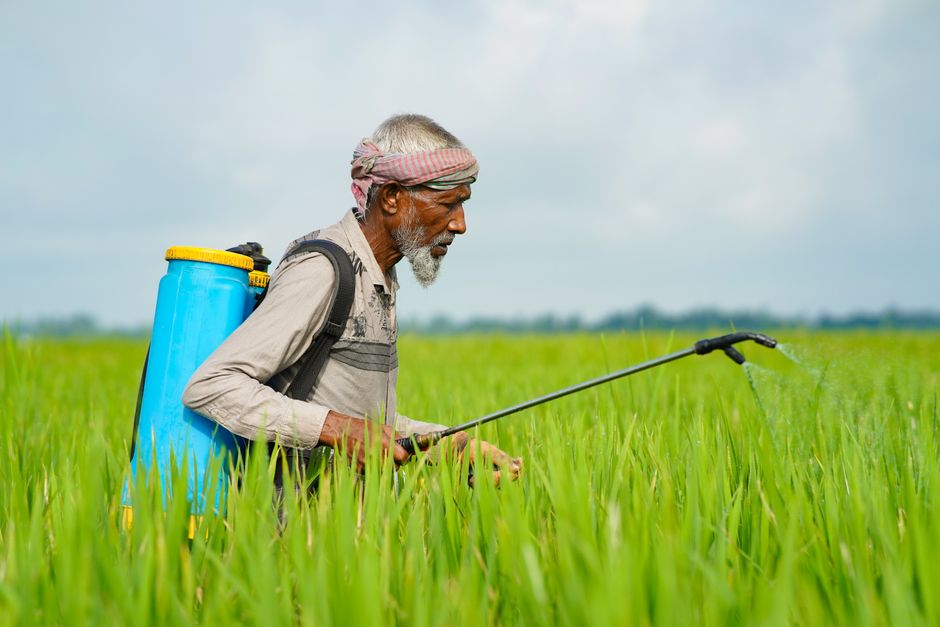
A fast price alert can help a cocoa cooperative decide when to sell. It cannot tell a farmer how long to stay out of a sprayed field unless that guidance has been reviewed, translated into clear Asante Twi, and tied to a person who can handle uncertainty.
At dawn, imagine a cooperative leader checking a phone as cocoa prices climb. Beside him, a farmer is holding a sprayer and asking a more urgent question: “How much should I use, and when can my workers return?”
One answer arrived in seconds. The other must carry the weight of someone’s health.
When the urgent signal outruns the safe decision
In January 1986, Morton Thiokol engineer Roger Boisjoly was warning that the space shuttle Challenger’s solid rocket booster O-rings could perform poorly in unusually cold conditions. The launch schedule was visible. The engineering risk was harder to resolve.
During a conference with NASA on the evening before launch, Thiokol engineers recommended against launching below the temperatures supported by their experience. Management later reversed that recommendation. Challenger launched from Kennedy Space Center on January 28, 1986, and broke apart 73 seconds later, killing all seven crew members.
The Rogers Commission documented the technical failure and the decision process that preceded it. Its report described how concerns about the O-rings had existed before the launch and how the launch decision failed to treat those warnings with the seriousness they required.
The analogy has limits. A cocoa farmer asking about a chemical product is far removed from a shuttle launch. The mechanism still matters: a clear operational signal can create pressure to act while the safety evidence remains incomplete.
A rising market price says something about the market. It says nothing about dosage, re-entry intervals, pre-harvest intervals, protective equipment, or whether a named product is approved for the intended use.
Why fluent Twi can still carry a dangerous answer
A voice assistant can sound confident while passing along bad guidance. That risk grows when a system translates technical agricultural language automatically.
In Neuralis testing, machine translation changed `kokoo`, cocoa, into “chicken.” The sentence could still sound fluent. The core subject had changed.
That is why AgriVoice is being prepared around reviewed content rather than open-ended agronomy generation. The system is designed to select approved guidance blocks, speak them in Asante Twi, and send uncertain or missing cases to a named extension officer. It does not invent pesticide instructions.
Three chemical guidance blocks remain held because verified dosage, re-entry, and pre-harvest details are incomplete. Refusing those questions is the safe behavior. Releasing a polished answer before an agronomist clears the underlying advice would turn speed into a liability.
The same principle applies when a farmer’s wording only partly matches reviewed material. A partial match should lead to careful escalation, as described in What Happens When a Farmer’s Question Only Half Matches Reviewed Guidance?. The system should never fill the missing half with a plausible guess.
Build two clocks into the service
Market information and safety guidance run on different clocks.
A price alert may be useful the moment a verified market feed changes. Chemical advice needs a slower chain: agronomic review, farming-aware translation, spoken-language review, constrained selection, and a working escalation route. Combining both into one undifferentiated stream can make them appear equally ready for action.
A safer service labels the difference in behavior.
Market information can arrive quickly with its source and timestamp. Reviewed farm guidance can answer only within its approved scope. A question about an unresolved chemical block should stop and move to the named officer, with responsibility for responding within the agreed service window.
Neuralis plans to test this workflow with a two-week pilot involving 20 to 50 Asante-Twi-speaking cocoa farmers and a cocoa-sector partner. The pilot gates require reviewed Twi content, an agronomist’s decision on the held chemical blocks, real farmer-speech evaluation, working WhatsApp delivery, and a complete staff safety rehearsal.
The scorecard is equally direct: zero unsafe pesticide answers. Success includes a correct escalation when the reviewed material cannot support an answer. What Happens When a Cocoa Farmer’s Question Cannot Be Answered Safely? explains why that handoff belongs inside the product rather than outside it.
Make the pause operational
A responsible pause needs somewhere to go. “Ask an expert” leaves the farmer carrying the same uncertainty. A named extension officer, a visible queue, and a response-time commitment turn refusal into a service.
Before exposing farmers to the workflow, a cooperative or technology partner should be able to answer four practical questions:
- Which guidance has a recorded agronomy approval?
- Who reviewed the spoken Asante Twi?
- What does the system do when confidence is low?
- Which named person receives the escalation?
Roger Boisjoly’s warning was available before Challenger launched. The later investigation showed that having safety information somewhere in the organization was insufficient. The decision process had to preserve its authority when schedule pressure rose.
That is the standard for agricultural voice guidance too. Let the price alert arrive at dawn. Keep the sprayer waiting until the reviewed answer, or the accountable person, is ready.
Comments
No comments yet.