
Recent passage of the Ghana Cocoa Board Bill, 2026 may shape how the cocoa sector works, but it cannot tell a farmer which pesticide dose is safe for the tree in front of him. That answer needs reviewed agronomic guidance in language the farmer understands, plus a clear route to an extension officer when the facts are incomplete.
Before sunrise, Kwabena, an illustrative composite of an Asante-Twi-speaking cocoa farmer in the Ashanti Region, hears the news on a small radio beside his work boots. Farmers have welcomed the Bill. He listens, nods, then looks at the container waiting near his doorway.
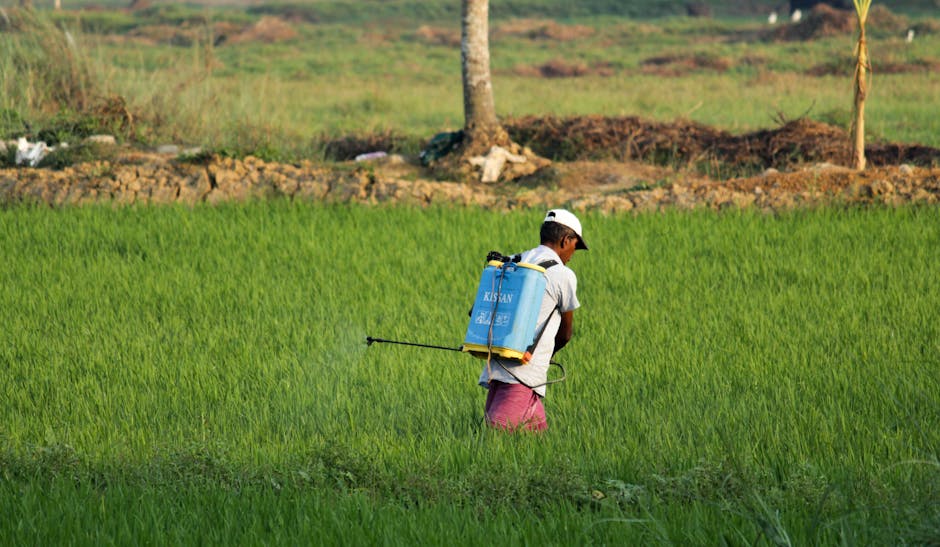
Several pods on one part of his farm have dark marks. Rain may come later. If he sprays the wrong mixture, enters the field too soon, or harvests before the safe interval has passed, the cost could reach beyond damaged cocoa. His own health and the people working beside him could be at risk.
The radio can tell Kwabena that the sector is changing. It cannot inspect that container, confirm its label, diagnose the pods, or approve a dose.
A national decision meets a field-level question
Legislation sets mandates, responsibilities, and rules. Farming decisions arrive in a different form: a spoken question asked while someone is holding a chemical container and deciding what to do next.
“What amount should I mix?”
“How long must we stay out of the sprayed area?”
“When can I harvest after applying it?”
Each question depends on details that a broad policy announcement cannot supply. The product, formulation, crop condition, label instructions, and approved local guidance all matter. A confident answer assembled from general knowledge can sound useful while leaving out the one interval that protects a farmer.
This is where policy communication often breaks down. The official development reaches the radio, phone, or community meeting. The operational answer does not travel the final distance into the field.
That gap becomes more dangerous when the advice concerns chemicals. AgriVoice currently withholds three chemical guidance blocks because dosage, re-entry, and pre-harvest intervals have not all been verified by a Ghanaian agronomist. Silence or escalation can feel frustrating in the moment, but fabricated precision would be worse. The three withheld blocks show what that restraint could prevent.
Reviewed Twi must carry the whole safety meaning
Kwabena asks questions in the language he uses on the farm. A useful pathway must preserve both his meaning and the safety conditions in the answer.
Literal translation cannot be trusted automatically in this setting. During earlier testing, machine translation changed “kokoo,” meaning cocoa, into “chicken.” The sentence remained fluent. The subject had changed completely.
Agricultural advice needs a stronger chain. A farming-aware translator writes spoken Asante Twi against owner-approved English content. A Ghanaian agronomist reviews chemical instructions, including dosage, re-entry, and pre-harvest intervals. The system then selects from those reviewed blocks instead of composing new agronomy.
That design keeps the answer inside known boundaries. It also makes uncertainty visible. If Kwabena’s question falls outside the reviewed material, the system should say so plainly and pass the question to a named extension officer.
The distinction matters because a voice can create authority. Clear pronunciation and a quick response may make weak information sound settled. Safety therefore depends on the source and review path, not only on how natural the audio sounds.
Escalation is part of the answer
Back at the doorway, Kwabena turns the container in his hands. The label is worn, and the reviewed material does not establish the missing interval for his situation. Spraying now could expose workers or affect when the cocoa can be handled safely.
The pathway changes at that moment. Instead of guessing, the voice response identifies the uncertainty and sends the question to the extension officer responsible for the pilot. Kwabena holds off.
That pause has an owner. The pilot requires a named extension officer, with escalations measured against a response target of less than one working day at the median. Without an accountable person, “ask an expert” merely sends the farmer into another queue.
This principle also applies beyond pesticide guidance. When a policy claim, eligibility rule, or effective date cannot be confirmed, the safest answer marks the gap and routes it for clarification. Policy questions need the same traceable approach.
The proof belongs on the farm
The Bill may create an important new framework. The next proof is smaller and more demanding: can one Asante Twi voice workflow help real cocoa farmers receive understandable answers, avoid unsafe instructions, and reach a responsible person when the reviewed content runs out?
Neuralis plans to test that question with a two-week pilot involving 20 to 50 farmers through a cocoa-sector partner. The measures are concrete: zero unsafe pesticide answers, at least 70 percent of questions answered or correctly escalated, at least 80 percent reported comprehension, and evidence that farmers return in the second week.
For Kwabena, success arrives without ceremony. The container remains closed until the missing guidance is checked. The news on the radio has become a safe next step in the field.
Comments
No comments yet.