
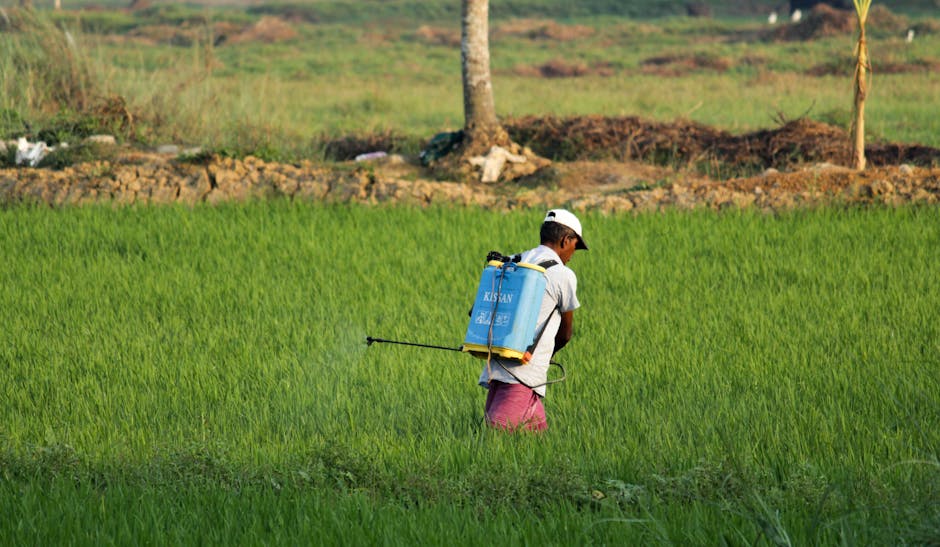
A safe farming voice service must stop when it hears a product name but cannot verify the formulation, concentration, dosage, and safety intervals. Treating two formulations as one answer could expose workers, damage cocoa trees, or leave unsafe residue before harvest.
At 6:40 in the morning, Kofi stood beside a blue sprayer at the edge of his cocoa plot outside Kumasi, turning a bottle in his hand. Rain had softened the paper label until the small print came away on his thumb. He could still make out the product name. He could not read the concentration.
His nephew had sent a voice note the night before: “Use the usual amount.” Kofi had used the product once before, but the bottle in his hand came from a different shop and the label no longer showed enough to confirm whether it matched the earlier one. The trees needed attention. So did the workers expected later that morning.
If he guessed, the bad ending was clear: a mixture meant for one formulation could become too strong for another. Someone could enter the field too soon. Cocoa pods could be affected. The name on the bottle would sound familiar right up to the moment it caused harm.
A product name does not contain the whole instruction
A chemical product name is only one part of a safe recommendation. The concentration, the crop stage, the target problem, the amount of water, and the timing all change what a farmer should do.
That is why a voice workflow has to resist a tempting shortcut. A farmer may remember the name accurately and still lack the detail that makes the answer safe. Speech recognition can capture the name. A language model can identify the topic. Neither should fill a missing concentration with a confident-sounding instruction.
For AgriVoice, the intended safety boundary is deliberately narrow. The system selects from reviewed content blocks rather than writing agronomy advice from scratch. When the available block does not safely match the question, the right response is an escalation to a named person, such as a partner’s extension officer.
That pause can feel frustrating in the moment. It is still better than a voice note that turns uncertainty into a dosage.
The pause has to arrive before the farmer starts mixing
Kofi’s question could sound straightforward: “I have this product. How much should I add?” But a safe system needs to hear the unanswered part: which version is in the bottle?
The useful response is specific about what is missing. It can ask Kofi to check the concentration on the label, take a clear photo if the channel supports it, or contact the assigned extension officer before mixing. It should also make clear that he should not proceed from the product name alone.
This is where agricultural voice advice earns trust. The service does not pretend every question has an immediate spoken answer. It helps the farmer recognize which detail matters and creates a path to someone accountable for the next decision.
AgriVoice currently withholds three chemical content blocks because verified dosage, re-entry, and pre-harvest intervals are missing. That restraint is a product decision, not an unfinished sentence. A response that refuses an unverified chemical instruction protects the farmer from the most dangerous kind of error: one delivered calmly, in familiar language, at the exact moment they are ready to act.
The same principle applies when a farmer’s words are clear but the underlying evidence is not. What Should Voice AI Do When a Farmer’s Chemical Question Arrives Mid-Mix? explores the risk of waiting until the mixture is already underway.
Local language makes the safety message usable
A pause only works if the farmer understands why it happened and what to do next. A vague refusal can sound like a technical failure. A clear explanation in the language the farmer uses can turn that moment into a practical safety step.
FiBL has reported that local-language IVR can be especially useful for farmers with limited literacy or poor eyesight, and that trusted organizations can help overcome mistrust of calls and messages. That matters here. The spoken response should be short, direct, and connected to a real human route when the question crosses a safety boundary.
For Kofi, the next step was not a lecture about formulations. It was a simple instruction: do not mix yet, keep the bottle, and get the concentration checked before anyone enters the field.
That is a better use of voice AI than making every silence disappear.
The safer outcome is a verified answer later
By late morning, Kofi had not sprayed. The bottle was still on the bench, its softened label held flat beneath a stone so the remaining print could dry. The workday had changed shape, but the workers had not entered a field after an unverified application.
A trusted extension officer could then confirm the formulation from the label or advise Kofi to use a different, verified product. Only after that confirmation should a reviewed instruction cover dosage, protective steps, re-entry timing, and pre-harvest requirements.
The lesson is practical for anyone building or deploying farm advice by voice: collect the details that make an instruction safe, and design a real escalation path for the details a system cannot verify. Familiar language should make a safety boundary easier to follow. It should never make an uncertain chemical recommendation sound certain.
Comments
No comments yet.