
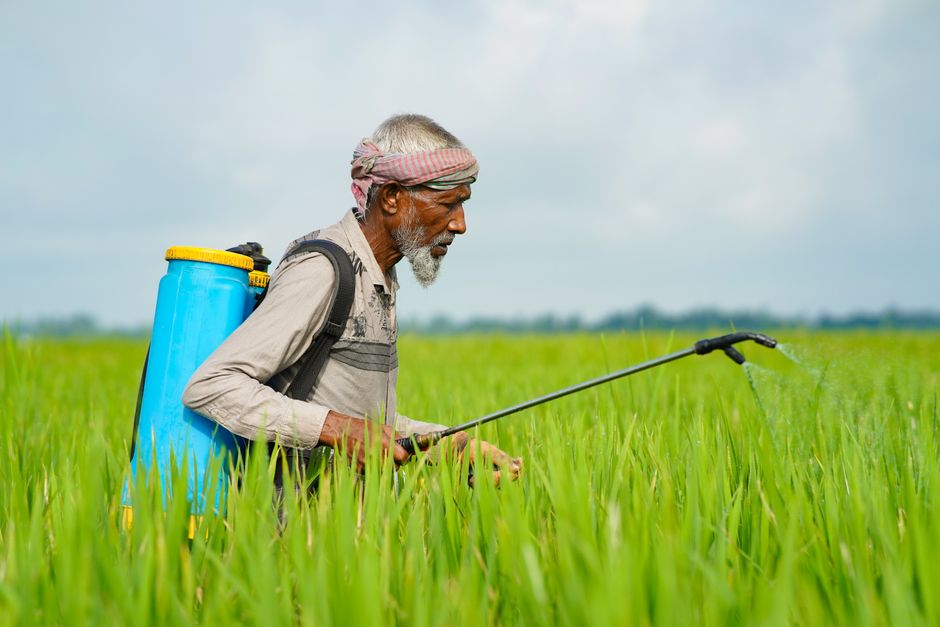
A Twi voice demo earns its place only when it handles the moment a farmer cannot afford a confident guess. For pesticide questions, AgriVoice must either return reviewed safety guidance or route the farmer to a named extension officer.
The question that changed the room
This illustrative composite follows Yaw, a young cocoa farmer at a technology boot camp in Ghana. He had come with his phone wrapped in a clear plastic sleeve and a small notebook in his shirt pocket, where he kept reminders from the farm.
At first, the demo felt simple. Yaw spoke a question in Asante Twi. The phone listened, selected a reviewed answer, and spoke Twi back. People leaned closer when they heard their language coming from the device. For a few minutes, the room had the easy excitement of a new tool doing what it promised.
Then Yaw raised the question that mattered.
He had a pesticide container at home with a label he did not fully understand. He wanted to know how much to use and when it would be safe to enter the cocoa plot again. The next morning was already planned for work in the field. If he sprayed with the wrong amount, or returned too soon, the risk would not stay inside a demo.
The answer could not be a polished sentence assembled from general information. A wrong instruction could put Yaw, a farm worker, or the crop in danger. Silence would be frustrating. A confident guess would be worse.
That is the point where a technology showcase becomes a safety test.
A helpful voice needs a safe boundary
AgriVoice is being prepared for a two-week pilot with 20 to 50 Asante-Twi-speaking cocoa farmers, through a cocoa-sector partner. Its job is deliberately narrow: receive a voice question, select from reviewed guidance, speak that guidance back, and escalate when the answer is missing, uncertain, or unsafe to provide.
The system does not write agronomy advice. It selects approved content blocks. That boundary matters most around chemicals.
Three pesticide-related content blocks remain held because dosage, re-entry, and pre-harvest intervals have not yet been verified by a Ghanaian agronomist. The correct response today is to refuse to guess and send the question to a person who can take responsibility for the answer.
That may feel less impressive than an instant response. It is far more useful than treating speed as the only measure of success.
A spoken answer carries authority, especially when it arrives in the language a farmer uses every day. Farmers should be able to ask follow-up questions in Twi without having to translate their concern into formal English first. They also deserve to hear a clear limit when the system does not have safe guidance.
The phrase “I do not know” can be responsible design when it comes with a real next step.
The person behind the escalation
For Yaw, the difference lies in what happens after the tool pauses. “Ask an extension officer” is not enough if nobody has agreed to receive the question, answer it, and follow through.
Before farmer exposure, the pilot requires a cocoa-sector partner to name the extension officer responsible for escalations. The pilot scorecard also sets an operational target: a median response in less than one working day. That creates accountability where a generic chatbot would leave a farmer alone with uncertainty.
Yaw’s question should become a clear handoff: what product name he heard, what he wants to do, what information is missing, and who will respond. If the label is unclear, the safer instruction may be to keep the container sealed until a qualified person can review it.
This is why pesticide safety cannot be treated as one more feature in a product list. It is an operational promise involving reviewed content, consented voice questions, a reachable human, and a process that works when the easy answer is unavailable.
Kwaku’s pesticide question cannot be guessed. An extension officer must respond. follows that same decision at the point where a plausible-sounding response would create harm.
What the pilot must prove
The boot camp context matters because technology, production methods, and value addition all belong in the same conversation about cocoa farming. A voice tool can make information easier to reach. It still has to earn trust through what it declines to say.
Before the pilot begins, AgriVoice needs reviewed spoken Asante Twi for its approved content, field testing with real farmer questions, working WhatsApp delivery, tested consent and deletion behavior, and a complete staff safety rehearsal. The team also needs to measure whether farmers understand the voice, whether they return in the second week, and whether answers arrive quickly enough to sustain a conversation.
One measure stands above the rest: zero unsafe pesticide answers. A single unreviewed chemical instruction reaching a farmer is a stop signal, not a minor defect.
When Yaw leaves the demonstration, the useful outcome is not a phone that seems clever. It is a tool that can say what has been reviewed, recognize what has not, and make sure his pesticide question reaches someone accountable before he acts.
Comments
No comments yet.