
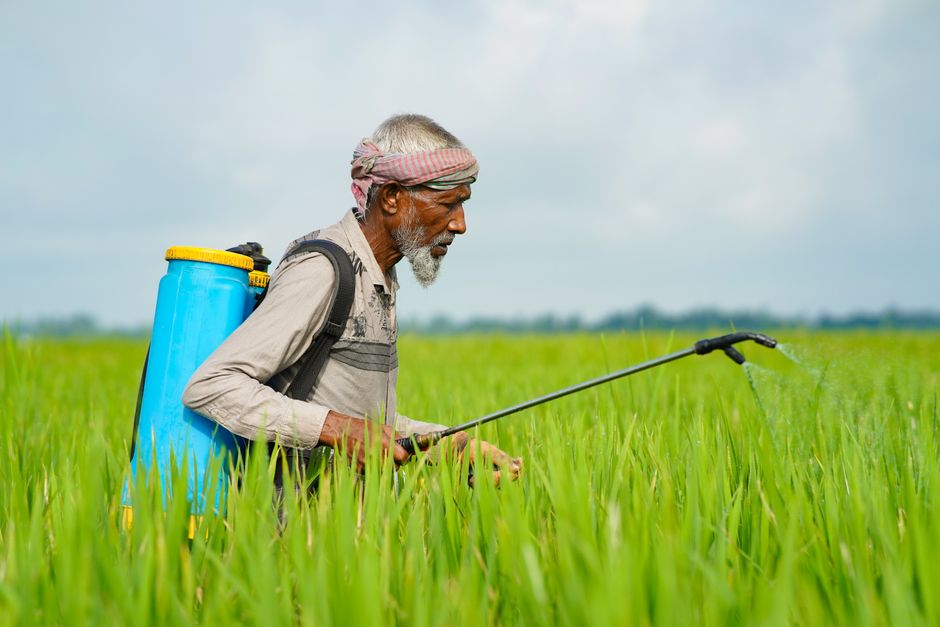
A safe agricultural AI should refuse to give pesticide instructions when key facts are missing and route the question to a named extension officer. Dosage, re-entry intervals, and pre-harvest intervals can determine whether a farmer, worker, crop, or buyer is put at risk.
At 6:40 on a Thursday morning, Kojo stands beside the edge of his cocoa plot with a sprayer hose looped around one boot. Rain has darkened the red soil overnight. He has been told to return to the field in a few days, but the bottle in his hand gives him no clear answer he trusts about when it is safe to do so.
He records a voice note in Asante Twi. He wants a simple instruction: mix this much, spray today, return on this day.
The bad outcome is close enough to picture. If he guesses wrong, someone could enter a recently treated field too soon. If he delays without advice, a crop problem may continue while he waits. A confident answer that leaves out one safety interval could sound helpful and still make the decision more dangerous.
A fluent answer can still be unsafe
Agricultural questions often arrive without the details needed for a safe response. A farmer may know a product name but not the concentration. The label may be worn, shared between households, or remembered by its colour. A question about spraying can also conceal two different questions: how to apply a product, and when people may safely return to the field afterward.
Those details cannot be filled in by an AI sounding certain.
AgriVoice is being built around reviewed guidance for cocoa farmers who speak Asante Twi. Its reasoning layer selects reviewed content rather than inventing agronomy advice. That boundary matters most with chemicals. If the required reviewed guidance is absent or the question is uncertain, the service should say so plainly and escalate.
Three chemical content blocks are currently withheld because verified dosage, re-entry, and pre-harvest information is still missing. Refusal is the correct response until a Ghanaian agronomist reviews those details. As The Pesticide Detail That Stops AgriVoice From Answering explains, the missing information is part of the instruction, not a minor footnote.
Escalation needs an accountable person at the end
“Ask an expert” can become a dead end when nobody owns the next step.
For a farmer like Kojo, escalation only helps if a named extension officer receives the question, has enough context to respond, and is accountable for the queue. The officer may need to ask for a photo of the label, confirm the product formulation, or advise the farmer not to spray until the information is clear. That is real agricultural support. It cannot be replaced with a vague promise that a human may respond someday.
This is why a cocoa-sector partner and named extension officer are entry gates for the AgriVoice pilot. Before farmers are exposed to the service, the partner must own recruitment and identify the person who receives escalations. Staff must also test the full path, including the case where no safe answer can be given.
The goal is not to make every question disappear into a handoff. Farmers deserve useful answers to common, reviewed questions. Escalation is for the moments when the system does not have enough evidence to speak safely.
The handoff should preserve the farmer’s actual question
A good escalation does more than forward a notification. It should preserve what the farmer asked, the language used, and why the system stopped.
In Kojo’s case, the message to the officer should make the uncertainty visible: the product or formulation could not be confirmed, and a safe re-entry instruction is unavailable. That prevents the officer from having to reconstruct the situation from a bare alert. It also makes the service’s limit clear to the farmer: the pause is about safety, not a technical failure.
Language matters here as much as routing. A farmer who asked in Asante Twi should be able to understand that the system is withholding an answer because it lacks verified guidance. A clear explanation can reduce the pressure to act on rumour, a neighbour’s old instruction, or an incomplete label.
The expected turnaround is operational, too. AgriVoice’s pilot scorecard sets a target of a named escalation owner and a median response time under one working day. That target is a way to measure whether the human part of the service is actually functioning. An unanswered queue leaves the farmer in the same position as before, except with more false confidence that help is coming.
Safety is measured by the decisions the system refuses to make
Later that morning, Kojo does not receive a made-up mixture or a guessed return date. He receives a clear message that the question has been passed to the extension officer because the required safety details have not been verified.
The uncertainty remains for a while. That is honest.
When the officer responds, the next decision can rest on the product details and field conditions that a reviewed system did not have. Kojo can put the sprayer aside until then, rather than treating a fluent voice response as permission to take a risk.
For agricultural AI, that is the standard worth building toward: give reviewed help where the evidence supports it, show the limit where it does not, and make sure a specific person is responsible for what happens next.
Comments
No comments yet.