
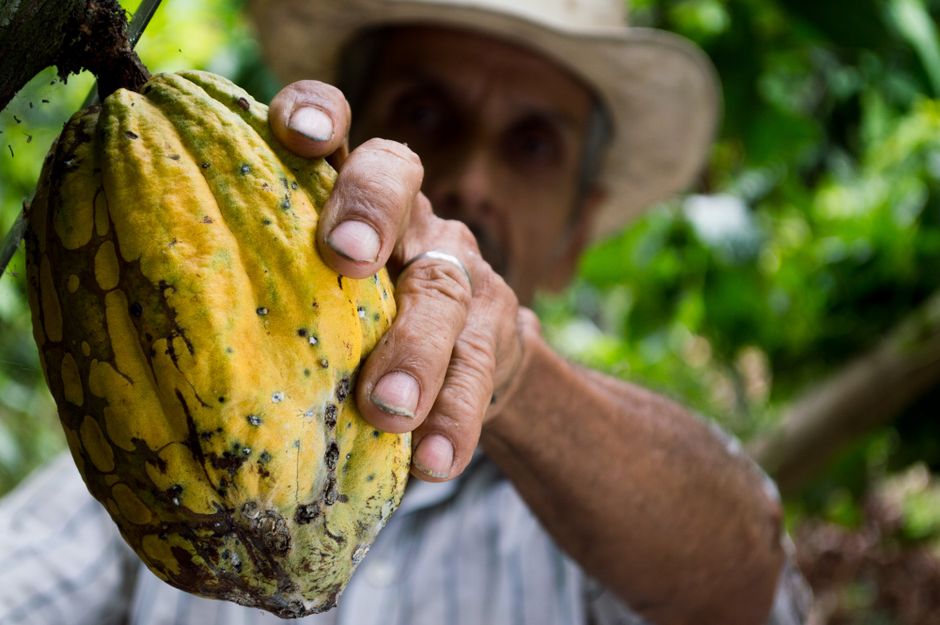
After new COCOBOD reforms are announced, a farmer might ask a question about pesticide use on WhatsApp. The safest and most useful response comes from pre-reviewed Asante Twi guidance or a direct handoff to a human expert, not from an automated system guessing answers. This approach is critical when dealing with sensitive agricultural advice where inaccuracies could lead to dangerous outcomes for both the farmer and their crop.
In 1980, the eruption of Mount St. Helens in Washington State posed a unique challenge to the U.S. Geological Survey (USGS) and local authorities. As ash blanketed vast areas, residents, farmers, and businesses had urgent questions about its safety: Was it toxic? How should it be cleaned? Could it damage crops or livestock? The initial scientific understanding of volcanic ash and its specific health impacts was still developing, and a confident, immediate answer for every nuanced local question was simply not available. In the immediate aftermath, as documented by the USGS itself and numerous scientific publications of the era, the priority was to disseminate what was known safely, to identify knowledge gaps, and to escalate complex, unanswerable questions to human experts who could provide qualified, context-specific advice, even if that advice was "we don't know yet, but here's what we recommend for now." Guessing or extrapolating beyond verified facts would have been irresponsible, potentially leading to widespread panic or unsafe practices.
Why validated answers are non-negotiable
When a cocoa farmer in Ghana asks about pesticide application, especially following new COCOBOD guidelines, the stakes are high. Incorrect information can lead to crop damage, health risks for the farmer and their family, environmental harm, or even regulatory penalties. Imagine a farmer asking for the re-entry interval after spraying a specific fungicide. A generic or machine-translated answer could confidently provide a dangerously short period, leading to premature field re-entry and exposure to harmful chemicals.
Our AgriVoice system is designed to prevent such scenarios by operating on a principle of informed safety. Instead of generating responses on the fly, it relies on a curated library of 40 expert-reviewed content blocks. These blocks, covering common cocoa farming questions and best practices, have been translated into Asante Twi by farming-aware native speakers, ensuring both linguistic accuracy and contextual relevance.
The critical role of human oversight
For questions involving sensitive topics like chemical pesticides, AgriVoice has a built-in "correct failure mode." This means that rather than guessing, it explicitly withholds information for three critical chemical blocks where dosage, re-entry intervals, and pre-harvest intervals lack verified data. This protective measure ensures that no unsafe instruction inadvertently reaches a farmer.
When a farmer asks one of these "held" chemical questions, or any other query that falls outside the scope of the pre-approved content, the system's response is to escalate to a human expert. In our pilot, this means an extension officer nominated by our cocoa-sector partner receives the query. This human in the loop can then provide a tailored, safe, and up-to-date answer, or acknowledge that more information is needed. Just as the USGS prioritized cautious, human-mediated communication for Mount St. Helens ash questions, AgriVoice ensures that critical agricultural advice is always grounded in verified knowledge and, when necessary, human judgment.
Building trust through reliable guidance
This focus on safety and verified content is foundational to building trust with farmers. In an environment where misinformation can spread quickly, a voice AI platform must be an unfailingly reliable source of truth. The initial investment in meticulously translating and reviewing content, establishing clear escalation paths, and deliberately refusing to guess pays dividends in farmer safety and confidence.
The lessons from Mount St. Helens apply directly: when public safety and livelihoods are at stake, the most responsible approach is to deliver verified information, acknowledge what isn't known, and empower human experts to bridge the gaps. For AgriVoice, this means ensuring that every piece of advice about COCOBOD reforms or pesticide use is not just fluent in Twi, but also rigorously safe and agriculturally sound. This is why our current strategy prioritizes a focused pilot of AgriVoice, proving its utility and safety through controlled, expert-backed processes, rather than rushing a broad, unverified portfolio.
Comments
No comments yet.