
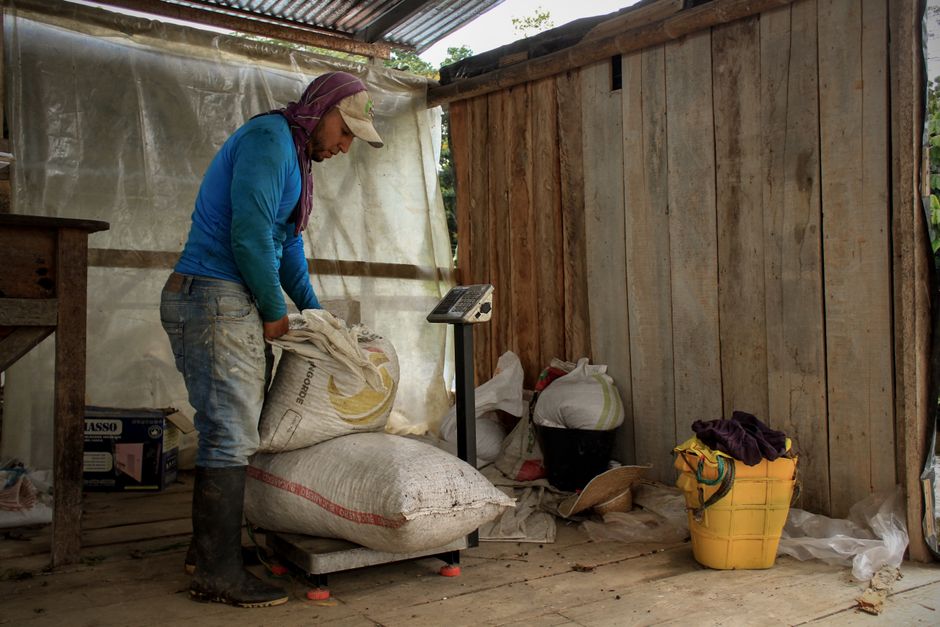
The announced producer price is a starting figure, not a promise of what one farmer will receive. The final payment depends on the accepted weight, the grade of the cocoa, any explained deductions, and when and how the buyer pays.
Imagine Kwaku, a young cocoa farmer outside Kumasi, standing beside his sacks before sunrise. He has heard the new producer price on the radio and already divided it in his head: money for labour, school costs, farm maintenance, and a small reserve for the next difficult month.
By midday, that plan is in danger.
The calculation begins at the scale
Kwaku watches each sack move toward the scale. One weighs less than he expected. Another is set aside for closer inspection. The figure he carried from the radio assumed a particular quantity of cocoa would be accepted, but the buyer will calculate payment from the weight recorded at purchase.
That difference matters. A farmer can estimate from the number of sacks and still be wrong about the total accepted weight. Sack sizes can vary. Moisture, handling, and the condition of the beans may also affect whether the cocoa is accepted as presented.
Kwaku has one urgent question: what weight will appear on his record?
He asks to see the measurement and write it down before the sacks leave his sight. That small act changes the conversation. Instead of arguing from memory later, he has the recorded weight used for the calculation.
When you hear a producer price, first identify its unit. Then compare that unit with the weight the buyer records. Multiplying the radio figure by an assumed number of sacks can create a spending plan built on cocoa that has not yet been measured or accepted.
Grade can change what enters the calculation
The sack pulled aside now becomes Kwaku’s greater worry. If part of his cocoa is rejected, downgraded, or returned for further work, his expected cash falls again.
A price announcement cannot tell him the grade of beans inside his sacks. That judgment happens at the point where the cocoa is assessed. Farmers therefore need clear answers about what was accepted, what was not, and why.
Kwaku asks the buyer to explain the concern in words he can repeat at home. Was the issue moisture? Bean quality? Foreign material? He avoids guessing, because each possibility calls for a different response.
The bad ending remains possible: if he agrees to a payment without understanding which cocoa qualified, he may leave with less money and no useful way to challenge or correct the calculation.
With the transaction still unfinished, he pauses. He asks for the accepted weight and grade to be stated together. Only then can he connect the announced price to the cocoa the buyer has agreed to purchase.
This is the practical calculation:
Accepted quantity × applicable price = gross amount
The word “accepted” carries much of the risk.
Every deduction needs a name
The gross amount still may not equal the cash Kwaku receives. A deduction might relate to an advance, an agreed service, transport, supplies, an existing balance, or another arrangement. The exact possibilities vary, so the safe rule is simple: never assume a deduction is standard merely because someone says it usually happens.
Kwaku asks for each deduction separately. What is it for? How much is it? Who agreed to it? Where will it appear on the transaction record?
A single unexplained total hides too much. An itemised calculation lets him distinguish a legitimate prior agreement from a mistake or a charge he does not recognise.
This also protects the money he needs after harvest. Spending the full gross estimate before checking deductions can consume funds meant for farm work or emergencies. The harvest reserve a cocoa farmer must protect starts with the same discipline: separate expected money from money already received and available.
At the table, Kwaku rewrites his plan using four lines: accepted weight, applicable price, listed deductions, and net amount due. His school payment may have to wait. That is painful, but it is safer than promising money he may not receive.
Payment terms decide when the money becomes usable
One final question remains. Is payment immediate, scheduled for later, split into parts, or dependent on another step?
“Amount due” and “cash available today” can describe different realities. Before committing the money, Kwaku asks how payment will arrive, when it is expected, and what record will prove that an unpaid balance remains outstanding.
This matters most when the household is already making decisions. A supplier may be waiting. Labourers may expect payment. A family expense may feel impossible to postpone. If the payment terms are unclear, the farmer carries the risk while everyone else hears a promise.
Recent calls from the Young Cocoa Farmers Association for clarity on key policies underline the wider issue: an announcement becomes useful only when farmers can connect it to the rules governing their own transaction. Where an effective date, eligibility rule, or payment condition remains unclear, pausing a major spending decision is sensible. Cocoa season opening dates and verified facts shows why timing details deserve the same care as price.
Kwaku leaves with a smaller figure than the one he imagined at sunrise, but now it is a figure he can explain. The accepted weight is written down. The grade decision is clear. Each deduction has a name. The payment terms are recorded.
That evening, he plans from the net amount due, and he spends only from the money that has actually arrived.
Comments
No comments yet.